Best Freelance Digital Marketer in Malappuram
Uncategorized

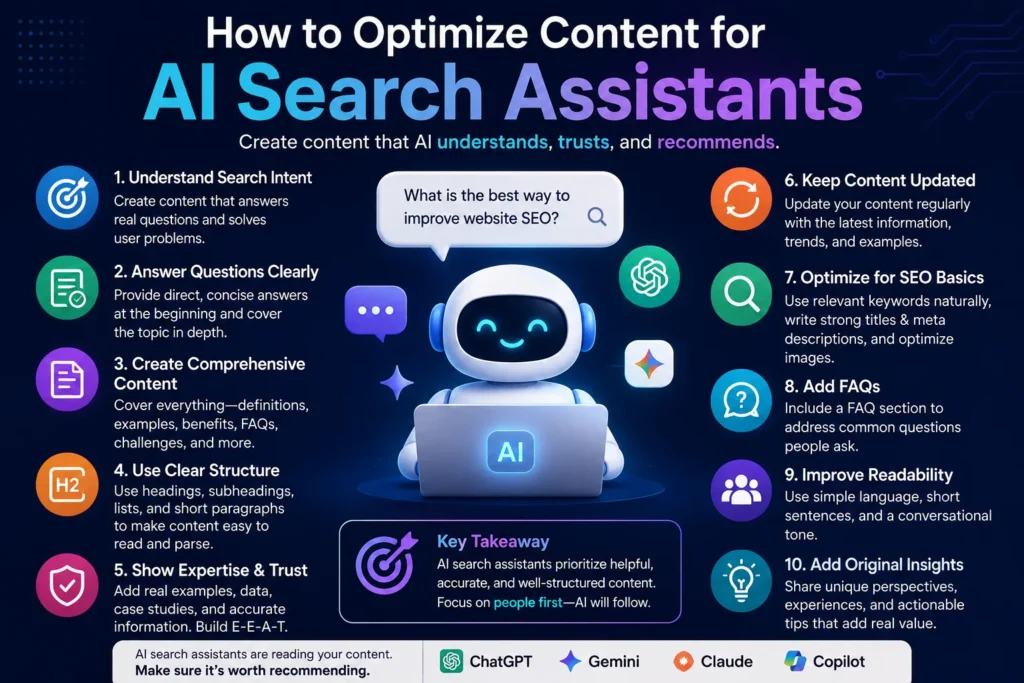
How to Optimize Content for AI Search Assistants

How to Optimize Content for AI Search Assistants (2026 Guide) Introduction The way people search for information online is changing rapidly. Instead of relying only on traditional search engines, many users now ask questions directly to AI-powered search assistants such as ChatGPT, Gemini, Claude, and Microsoft’s Copilot. These AI tools provide direct answers by analyzing high-quality content from across the web. This shift means businesses and content creators need to think beyond traditional Search Engine Optimization (SEO). While SEO remains important, optimizing content for AI search assistants is becoming equally valuable. So, how can you ensure your content is more likely to be referenced or recommended by AI systems? In this guide, we’ll explore practical strategies to help your content stay relevant in the era of AI-powered search. What Is AI Search Optimization? AI Search Optimization is the process of creating content that AI assistants can easily understand, analyze, and use when generating responses to users. Unlike traditional search engines that mainly rank webpages, AI assistants aim to provide complete, accurate, and conversational answers. They prioritize content that is: Instead of simply focusing on keywords, AI search rewards content that genuinely answers people’s questions. Focus on Search Intent Understanding user intent is more important than ever. Ask yourself: For example, instead of writing only about “SEO,” create content that answers questions such as: The more completely you answer related questions, the more useful your content becomes. Write Like You’re Answering Questions AI assistants favor content that directly answers user queries. Instead of writing long introductions, provide concise answers early in the article before expanding on the topic. For example: Question: How long does SEO take? Answer: Most businesses begin seeing meaningful SEO improvements within three to six months, although results vary depending on competition, website quality, and content strategy. This clear structure makes it easier for both readers and AI systems to understand your content. Create Comprehensive Content AI prefers pages that cover a topic thoroughly rather than articles that provide only surface-level information. A high-quality article should include: Comprehensive content reduces the need for users to visit multiple sources, making it more valuable. Use Clear Headings Proper content structure helps AI understand your article. Use logical heading levels such as: Avoid large blocks of text. Break information into smaller sections using headings, bullet points, and numbered lists where appropriate. Well-organized content improves readability for both humans and AI. Demonstrate Expertise AI assistants prioritize trustworthy information. Support your content with: Avoid publishing articles created solely to rank for keywords. Instead, focus on providing genuine value to readers. If you work in digital marketing, sharing campaign experiences, lessons learned, or industry observations can make your content more authoritative. Keep Content Updated AI systems often favor recent and relevant information. Review older blog posts regularly by: Keeping your content current improves its usefulness and increases the likelihood of remaining relevant over time. Optimize for Traditional SEO Although AI search is growing, traditional SEO still plays an important role. Follow essential SEO best practices: Strong SEO provides a solid foundation for AI discoverability. Answer Frequently Asked Questions Many AI-generated responses are built around common user questions. Adding an FAQ section can increase your content’s value. Examples: Can AI replace SEO? No. AI is changing how people search, but SEO remains essential for helping search engines and AI systems discover quality content. Should businesses optimize for AI search? Yes. As AI assistants become more widely used, optimizing content for AI improves visibility and helps businesses reach users in new ways. Improve Readability Readable content performs better for both users and AI. Best practices include: Complex writing may confuse readers and reduce the effectiveness of your content. Build Topical Authority Instead of publishing isolated articles, create multiple pieces of content around a single topic. For example, if your niche is digital marketing, write articles about: Link these articles together using internal links. This helps establish your website as a reliable resource on the subject. Use Original Insights One of the biggest advantages humans have over AI is original thinking. Include: Unique insights make your content more valuable and harder to replicate. Avoid Low-Quality AI Content AI tools can help generate ideas and drafts, but publishing unedited AI-generated articles often results in generic content. Always: The goal is to use AI as an assistant—not a replacement for quality writing. The Future of AI Search AI-powered search will continue evolving, but one principle is unlikely to change: helpful content wins. Businesses that focus on solving real problems, answering questions clearly, and demonstrating expertise are more likely to succeed in both traditional search engines and AI-powered search assistants. Rather than writing for algorithms alone, create content that genuinely helps your audience make informed decisions. Conclusion Optimizing content for AI search assistants is about creating useful, trustworthy, and well-structured information that answers users’ questions effectively. While traditional SEO remains important, businesses should also focus on clarity, comprehensive coverage, expertise, and readability. AI systems are designed to surface content that provides genuine value rather than simply matching keywords. The future of digital marketing belongs to creators who combine strong SEO practices with human insight and high-quality content. By consistently publishing helpful, accurate, and user-focused articles, you can improve your visibility across both search engines and AI-powered search assistants, ensuring your content remains relevant in the evolving digital landscape. Blogging vs Social Media: Which Brings More Leads? Introduction In today’s digital landscape, businesses have countless ways to reach potential customers. Among the most effective strategies are blogging and social media marketing. Both help increase brand visibility, engage audiences, and generate leads, but they work in very different ways. Many business owners ask the same question: Which one brings more leads—blogging or social media? The answer isn’t about choosing one over the other. Each serves a different purpose in the customer journey. Blogging focuses on long-term organic growth through search engines, while social media excels at building awareness and engagement in real time. Understanding the strengths of both can help you
Best Freelance Digital Marketer in Malappuram
Uncategorized

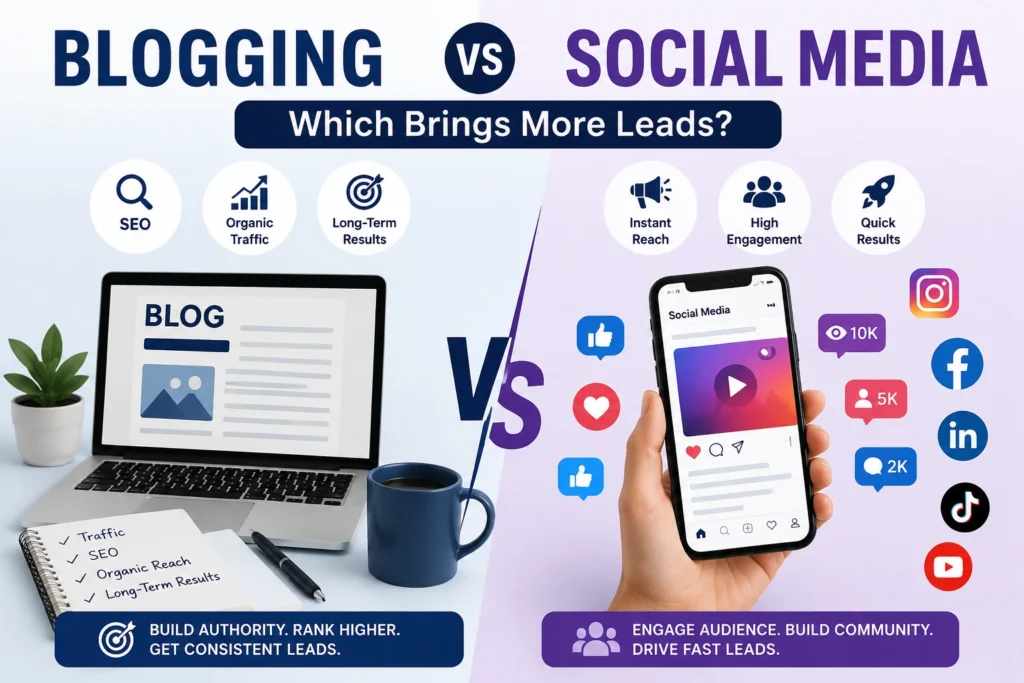
Blogging vs Social Media: Which Brings More Leads?

Blogging vs Social Media: Which Brings More Leads? Introduction In today’s digital landscape, businesses have countless ways to reach potential customers. Among the most effective strategies are blogging and social media marketing. Both help increase brand visibility, engage audiences, and generate leads, but they work in very different ways. Many business owners ask the same question: Which one brings more leads—blogging or social media? The answer isn’t about choosing one over the other. Each serves a different purpose in the customer journey. Blogging focuses on long-term organic growth through search engines, while social media excels at building awareness and engagement in real time. Understanding the strengths of both can help you create a marketing strategy that consistently attracts qualified leads. The short answer is no but it is changing the role of digital marketers significantly. AI can automate repetitive tasks, process large amounts of data, and provide valuable insights in seconds. However, successful marketing still depends on human creativity, strategic thinking, emotional understanding, and ethical decision-making. Understanding Blogging Blogging involves publishing informative articles on your website that answer questions, solve problems, or educate your target audience. A well-written blog is typically optimized for search engines (SEO), allowing it to appear in Google search results when people look for relevant information. Examples include: How SEO Helps Small Businesses Grow Meta Ads vs Google Ads Digital Marketing Trends in 2026 Unlike social media posts, blogs remain available on your website and can continue generating traffic for months or even years. Understanding Social Media Marketing Social media marketing focuses on creating and sharing content across platforms such as Instagram, Facebook, LinkedIn, YouTube, Threads, and X. Businesses use these platforms to: Build brand awareness. Connect with customers. Promote products and services. Drive website traffic. Encourage conversations and engagement. Content formats include short videos, reels, carousels, stories, live sessions, images, and polls. Because social media reaches users where they already spend time, it is an effective channel for increasing visibility quickly. Advantages of Blogging Blogging offers several long-term benefits for businesses. Improves Search Engine Visibility Every blog post creates another opportunity to rank on Google. As your content library grows, your website becomes more visible to people searching for solutions related to your business. Generates Long-Term Traffic Unlike social posts that disappear from feeds within days, a high-ranking blog can continue attracting visitors for years with minimal updates. Builds Trust and Authority Publishing helpful, informative content positions your business as an industry expert. Customers are more likely to trust businesses that consistently provide valuable information. Attracts High-Intent Visitors People who find your blog through search engines are usually looking for answers or solutions. These visitors often have stronger purchase intent than casual social media users. Advantages of Social Media Social media offers unique benefits that blogging cannot replace. Instant Reach A single post or Reel can reach thousands of people within hours, especially when it gains strong engagement. Strong Audience Engagement Businesses can interact directly with followers through comments, direct messages, polls, and live sessions, creating stronger relationships. Brand Personality Social media allows companies to showcase their culture, values, and personality in a way that’s difficult to achieve through blog articles alone. Fast Content Distribution Launching a product, announcing an offer, or sharing company updates happens almost instantly through social media platforms. Which Generates Better Leads? The quality of leads often depends on how users discover your business. Someone searching Google for “best SEO agency near me” or “how to improve website traffic” is actively looking for a solution. This makes blog visitors more likely to become customers. On the other hand, many social media users are browsing for entertainment or inspiration. While engaging content can generate inquiries, these users may not have immediate buying intent. This means blogging often attracts fewer visitors than social media but delivers more qualified leads over time. Cost and Return on Investment Both strategies require investment, but they produce different types of returns. Blogging Requires consistent content creation. SEO takes time to produce results. Delivers long-term organic traffic. Offers a strong long-term return on investment. Social Media Easy to start with little or no cost. Often benefits from paid advertising. Requires frequent posting. Produces faster but shorter-lived results. Businesses seeking sustainable growth often benefit from investing in both approaches Conclusion So, which brings more leads—blogging or social media? For immediate visibility and audience engagement, social media delivers faster results. For consistent, high-quality leads and long-term organic growth, blogging provides greater value over time. The most effective businesses use both strategies together. Blogging attracts people actively searching for solutions, while social media expands your reach, strengthens your brand, and encourages ongoing engagement. By combining these two powerful marketing channels, businesses can increase website traffic, build trust with potential customers, and create a reliable system for generating leads year after year.
Best Freelance Digital Marketer in Malappuram
Uncategorized

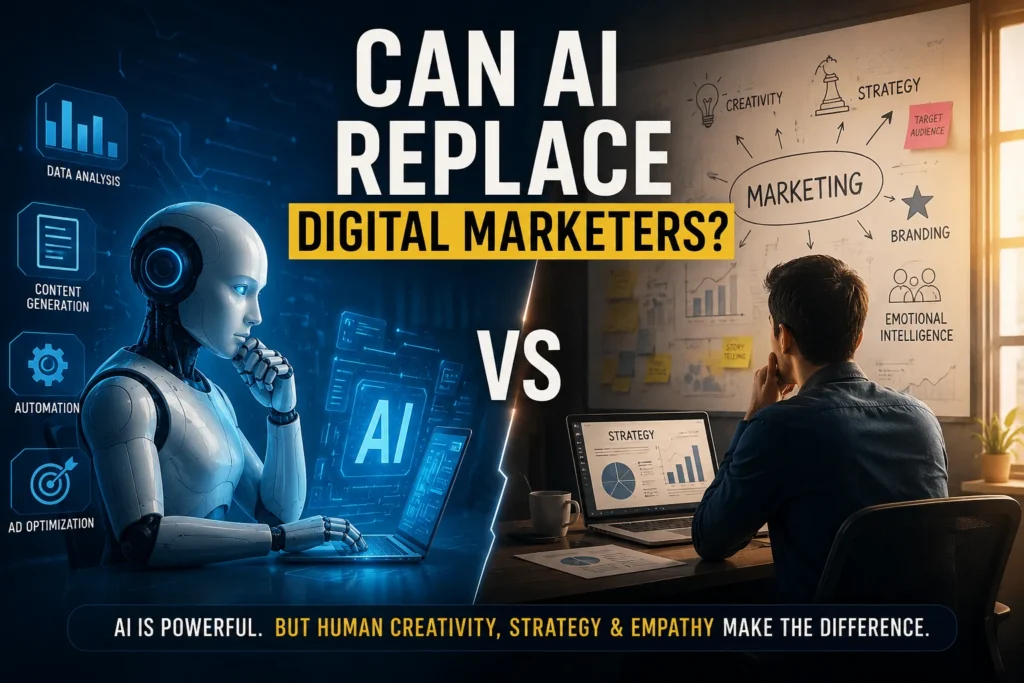
Can AI Replace Digital Marketers?

Can AI Replace Digital Marketers? Introduction Artificial intelligence (AI) has transformed the way businesses approach marketing. From generating content and analyzing customer behavior to automating campaigns and optimizing advertisements, AI-powered tools have become a regular part of many marketing teams. This rapid growth has sparked an important question: Can AI replace digital marketers? The short answer is no but it is changing the role of digital marketers significantly. AI can automate repetitive tasks, process large amounts of data, and provide valuable insights in seconds. However, successful marketing still depends on human creativity, strategic thinking, emotional understanding, and ethical decision-making. What AI Can Do Well AI excels at handling tasks that involve speed, repetition, and data analysis. Modern AI systems can: Generate blog outlines and marketing copy. Analyze customer data to identify trends. Recommend the best times to publish content. Automate email campaigns and customer segmentation. Optimize online advertisements based on performance. Create reports and dashboards from marketing metrics. These capabilities save marketers time and allow teams to focus on higher-level planning instead of routine work. Areas Where AI Falls Short Despite its impressive capabilities, AI has limitations. It does not truly understand human emotions, cultural nuances, or the unique identity of a brand in the way people do. For example, AI might write a technically correct advertisement, but it may not capture the humor, empathy, or storytelling that resonates with a specific audience. It also lacks real-world judgment and accountability when unexpected situations arise. Marketing often requires balancing business goals with public perception, legal considerations, and ethical concerns—areas where human oversight remains essential. The Importance of Human Creativity Great marketing campaigns are built on original ideas and memorable experiences. Creativity involves connecting with audiences in ways that go beyond patterns found in existing data. Humans create compelling brand stories, develop innovative campaign concepts, and adapt messaging based on changing social and cultural contexts. While AI can assist with brainstorming or drafting, the final vision and creative direction usually benefit from human expertise. In competitive markets, originality is often what makes a campaign stand out. Strategy Requires Human Judgment Digital marketing is not only about producing content or running ads. It also involves making strategic decisions such as: Identifying target audiences. Positioning products in the market. Allocating budgets across channels. Responding to competitors. Managing brand reputation during crises. AI can provide recommendations based on data, but deciding which path aligns with long-term business objectives requires critical thinking and experience. Customer Relationships Matter People often connect with brands through trust and authenticity. Building those relationships involves understanding customer needs, responding with empathy, and communicating in a way that reflects the company’s values. For example, handling customer complaints during a public relations issue or crafting messages after a sensitive event requires emotional intelligence that AI cannot fully replicate. Human marketers play a vital role in maintaining these relationships and ensuring communication feels genuine rather than mechanical. AI as a Productivity Tool Instead of replacing marketers, AI is increasingly becoming a powerful assistant. A digital marketer might use AI to: Generate multiple headline ideas. Summarize campaign performance. Suggest keyword opportunities. Draft social media captions. Personalize email subject lines. Identify trends from large datasets. This allows professionals to complete projects more efficiently while spending more time on planning, creativity, and client communication. Conclusion AI is reshaping digital marketing, but it is not a complete replacement for digital marketers. It excels at automation, analysis, and accelerating workflows, yet it cannot fully replicate human creativity, strategic judgment, empathy, or relationship-building.

Best Freelance Digital Marketer in Malappuram
Uncategorized

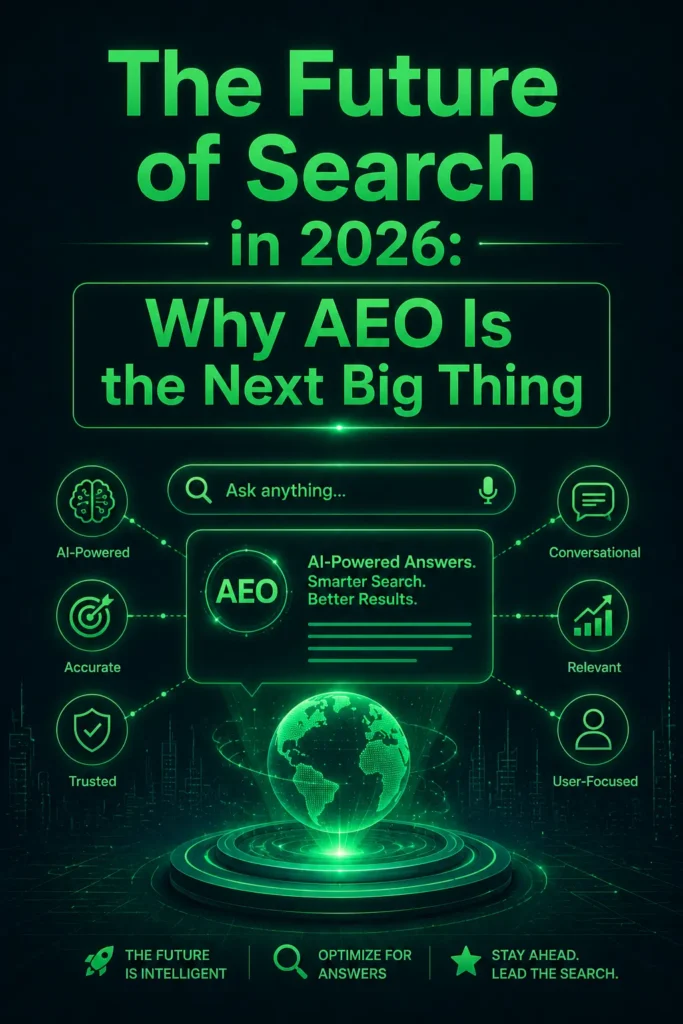
The Future of Search in 2026: Why AEO Is the Next Big Thing

The Future of Search in 2026: Why AEO Is the Next Big Thing Introduction The digital marketing industry is evolving faster than ever before. Over the last decade, businesses mainly focused on Search Engine Optimization (SEO) to improve website rankings and attract visitors through Google search results. However, in 2026, the search landscape is changing dramatically because of Artificial Intelligence (AI), voice assistants, and conversational search platforms. Users no longer want to scroll through multiple websites to find information. Instead, they expect instant and accurate answers within seconds. This shift has introduced a new concept called Answer Engine Optimization (AEO). AEO is becoming one of the most important strategies for businesses, bloggers, and marketers who want to stay visible online. While traditional SEO still matters, modern search engines now prioritize direct answers, user intent, and high-quality content. Businesses that adapt to this change early will gain a major competitive advantage in the future. What Is Answer Engine Optimization? Answer Engine Optimization, commonly known as AEO, is the process of optimizing content so AI-powered systems can understand and deliver it as a direct answer to users. Unlike traditional SEO, which mainly focuses on ranking web pages higher on search engines, AEO focuses on becoming the answer itself. Today, people use AI assistants, voice search, and conversational search engines to ask questions naturally. For example, users search with questions like: “What is digital marketing?” “How can I improve website traffic?” “Best SEO strategies in 2026” Instead of showing only links, AI-powered search platforms now summarize and present direct answers instantly. Because of this, websites must create content that is clear, structured, and easy for AI systems to understand. This shift has introduced a new concept called Answer Engine Optimization (AEO). AEO is becoming one of the most important strategies for businesses, bloggers, and marketers who want to stay visible online. While traditional SEO still matters, modern search engines now prioritize direct answers, user intent, and high-quality content. Businesses that adapt to this change early will gain a major competitive advantage in the future. Why Traditional SEO Alone Is No Longer Enough Traditional SEO strategies such as keyword stuffing, excessive backlinks, and ranking manipulation are becoming less effective. Search engines are smarter now and focus more on user experience and content quality. Websites that genuinely help users are more likely to perform well in search results. Modern search engines analyze: User intent Content relevance Readability Expertise and trust Topic authority User engagement This means businesses must focus on creating valuable content instead of trying to trick algorithms. A small website with useful and informative content can now outperform larger websites that rely on outdated SEO tactics. SEO is not disappearing, but it is evolving into a more intelligent and user-focused strategy. The Role of AI in Modern Search Artificial Intelligence is transforming how search engines understand and display information. AI systems can now analyze context, understand conversational language, and predict user intent more accurately than before. For example, when someone searches “best ways to grow a business online,” AI systems understand that the user may need information about digital marketing, branding, SEO, social media, and advertising. Instead of showing unrelated keyword-based pages, search engines now try to provide complete and meaningful answers. AI-powered search tools also reduce the need for users to open multiple websites. This creates both opportunities and challenges for businesses. Brands that provide high-quality and well-structured content will gain visibility, while low-quality content may struggle to reach audiences. Importance of User-Focused Content In 2026, content creation is no longer only about pleasing search engine algorithms. It is about helping users solve problems quickly and effectively. Search engines prefer content that is written naturally and provides genuine value. High-performing content usually includes: Clear headings Short paragraphs Conversational writing Direct answers FAQs Step-by-step explanations Content should be easy to read for both humans and AI systems. Complicated language and unnecessary keyword repetition can reduce readability and harm user experience. Businesses should also focus on understanding what users truly want instead of simply targeting high-volume keywords. Voice Search and Conversational Queries Voice search is becoming increasingly popular because people prefer speaking rather than typing. Smart devices and virtual assistants have made voice-based searching more common in everyday life. Voice searches are usually more conversational than traditional searches. For example, instead of typing “SEO tips,” users may ask: “What are the best SEO tips for beginners?” “How can I improve my website ranking quickly?” Because of this trend, businesses should optimize their content for natural language and question-based searches. Articles written in a conversational style have a better chance of appearing in voice search results and AI-generated answers. Building Authority Through Quality Content Topical authority is becoming one of the strongest ranking factors in modern digital marketing. Search engines trust websites that consistently publish useful and reliable information within a specific niche. For example, a digital marketing website should regularly publish content about: SEO AEO Social media marketing Branding Google Ads Content marketing Publishing high-quality articles consistently helps build trust with both users and search engines. Over time, this increases visibility, traffic, and credibility online. Businesses should focus on quality over quantity because a few valuable articles often perform better than many low-quality posts. Voice searches are usually more conversational than traditional searches. For example, instead of typing “SEO tips,” users may ask: “What are the best SEO tips for beginners?” “How can I improve my website ranking quickly?” Because of this trend, businesses should optimize their content for natural language and question-based searches. Articles written in a conversational style have a better chance of appearing in voice search results and AI-generated answers. Human Creativity Still Matters Many people believe AI will completely replace human content creators. However, this assumption ignores the importance of creativity, storytelling, and emotional connection. AI tools can generate information quickly, but human creativity adds originality and authenticity to content. Readers still prefer content that feels personal, engaging, and meaningful. The best content strategies in 2026 combine: Human expertise

Best Free Lance Digital Marketer in Malappuram
Uncategorized

Smart Marketers Follow Trends. Great Marketers Lead Them

Smart Marketers Follow Trends. Great Marketers Lead Them Introduction In today’s fast-moving digital world, marketing trends change almost overnight. New tools, platforms, and strategies constantly reshape how brands connect with their audiences. Many marketers try to stay relevant by following these trends—adjusting their content and campaigns based on what is currently popular. While this approach helps maintain visibility, it rarely leads to long-term success. The real difference lies in a simple but powerful idea: smart marketers follow trends, but great marketers lead them. This distinction separates those who merely keep up from those who stand out and build lasting influence. Understanding the Difference Following trends means observing what is already working and applying it to your own strategy. For example, when short-form video content gained popularity on platforms like Instagram and TikTok, many marketers quickly adopted reels and short videos to stay relevant. This is a smart move because it helps brands stay competitive and visible. However, leading trends requires a different mindset. It involves identifying opportunities before they become mainstream and creating something unique that others eventually follow. Trend leaders don’t just react to change—they anticipate it. They experiment, take calculated risks, and often shape the direction of the industry instead of adapting to it. Why Following Trends Isn’t Enough There is a common assumption that keeping up with trends is enough to succeed, but this idea has limitations. When everyone follows the same strategies, content becomes repetitive and loses its impact. Audiences begin to see similar posts, videos, and campaigns everywhere, which reduces engagement and interest. Brands that only follow trends often struggle with originality, compete in crowded spaces, and depend heavily on external changes for growth. On the other hand, marketers who lead trends create differentiation. They build authority, gain trust, and attract attention organically because their content offers something new. Following trends may keep you relevant, but leading trends makes you memorable. The Role of Innovation in Marketing Innovation plays a central role in becoming a trend leader. Great marketers do not wait for proven formulas—they create them. This does not mean ignoring trends completely, but rather using them as a starting point to build something better. For instance, when AI tools like ChatGPT became widely used, many marketers relied on them for quick content generation. However, trend leaders explored deeper possibilities, such as improving personalization, enhancing strategy, and creating more meaningful content experiences. Instead of simply asking how to use a trend, they focus on how to improve or redefine it. This mindset shift is what drives innovation and sets leaders apart. How to Move from Following to Leading Transitioning from a trend follower to a trend leader requires intentional effort and a change in perspective. It begins with thinking beyond the present and focusing on what will matter in the future. Instead of copying what is currently working, marketers should ask deeper questions about audience needs, content gaps, and emerging opportunities. Another important step is focusing on value rather than virality. While viral content can bring short-term attention, meaningful content that solves real problems builds long-term trust and loyalty. Developing a unique voice is equally important. When your content reflects your perspective and experience, it stands out in a crowded market. Experimentation also plays a key role. Not every idea will succeed, but every attempt provides insights that contribute to growth. Finally, understanding your audience deeply allows you to create content that resonates and even shapes their expectations. Balancing Trends and Originality While leading trends is important, completely ignoring existing trends can be risky. Trends provide valuable insights into what audiences are interested in and how platforms evolve. The key is to find a balance. Smart marketers follow trends to stay updated, while great marketers add originality to stand out and lead when opportunities arise. Trends should be seen as a foundation, not a final strategy. By combining awareness with creativity, marketers can remain relevant while also building a unique identity. The Future of Marketing Leadership As digital marketing continues to evolve, especially with the growth of AI and automation, the gap between followers and leaders will become more noticeable. Tools are becoming more accessible, allowing anyone to create content quickly. However, accessibility also leads to saturation. In the future, audiences will value authenticity, creativity, and meaningful engagement more than ever. The marketers who succeed will not be those who simply follow trends at speed, but those who bring fresh ideas and innovative thinking. Creativity will become the most important differentiator in an increasingly crowded digital space. Conclusion “Smart marketers follow trends. Great marketers lead them” is not just a statement—it is a mindset that defines long-term success in digital marketing. Following trends helps you survive in a competitive environment, but leading trends helps you grow, stand out, and build lasting influence. To move from average to exceptional, marketers must shift their focus from copying what works to creating something worth following. In the end, the brands and individuals that people remember are not those who followed the path, but those who had the vision to create it.

best digital marketing expert in malappuram
Uncategorized

Answer Engine Optimization (AEO): The Future of SEO in 2026

What is Answer Engine Optimization (AEO)? Answer Engine Optimization (AEO) is the practice of structuring and optimizing content so it can be directly picked up and delivered as a clear answer by AI systems, voice assistants, and modern search engines. While traditional SEO focuses on improving rankings and driving users to click through to a website, AEO shifts the goal toward becoming the answer itself. This means creating content that is concise, authoritative, and easy for machines to understand and extract. As a result, your information is more likely to appear in featured snippets, voice search responses, and AI-generated answers, helping you gain visibility even without a direct click.       Why AEO is Important in 2026 Many marketers still rely on traditional SEO strategies, assuming they are enough to stay competitive, but that mindset is quickly becoming outdated. The digital landscape is shifting toward Answer Engine Optimization (AEO), driven by the rise of AI-powered search where users expect instant, direct answers instead of browsing multiple websites. At the same time, voice search is growing rapidly, with more people using voice assistants to ask conversational questions, changing how content needs to be structured. Adding to this shift, zero-click searches are becoming more common, meaning users often get the information they need directly on the search results page without ever visiting a website. Together, these trends make it clear that marketers need to adapt their strategies to stay visible and relevant.       AEO vs Traditional SEO Understanding the difference between traditional SEO and AEO is essential for adapting your digital strategy in today’s evolving search landscape. Traditional SEO primarily focuses on optimizing keywords, building backlinks, improving rankings, and driving website traffic. The goal is to help your website appear higher on search engine results pages and attract more visitors. In contrast, Answer Engine Optimization (AEO) shifts the focus toward understanding user intent, delivering direct and accurate answers, maintaining content clarity, and using structured information. Instead of just ranking, AEO aims to position your content as the best possible answer for users, especially in AI-driven search environments and voice queries. AEO vs Traditional SEO Understanding the difference between Traditional SEO and Answer Engine Optimization (AEO) helps you adapt your strategy to modern search behavior. Traditional SEO focuses on elements like keywords, backlinks, rankings, and driving website traffic, aiming to improve visibility on search engine results pages. In contrast, AEO emphasizes understanding user intent, providing direct and accurate answers, maintaining clear and concise content, and using structured information to ensure content is easily interpreted by search engines and AI platforms. This shift highlights the importance of not just attracting users, but effectively answering their queries in the most efficient way possible.       Key Strategies to Optimize for AEO Focusing on question-based content is essential in AEO because AI tools prioritize content that directly answers user queries. Instead of using broad titles like “Digital Marketing Trends,” framing your content as specific questions such as “What are the top digital marketing trends in 2026?” makes it more aligned with how users search. Providing clear and direct answers is equally important, as AI prefers short, accurate responses. Keeping answers within 40–60 words, using simple language, and placing them immediately below the heading increases visibility. Proper content structure also plays a key role—using H2 and H3 headings, bullet points, and short paragraphs helps AI easily understand and extract information. Additionally, optimizing for featured snippets by including definitions, step-by-step lists, and concise summaries improves your chances of being selected as a primary answer source. Using conversational language further enhances relevance, as search behavior has shifted toward natural, question-based queries. Finally, building topical authority by consistently creating related content within a niche and interlinking articles helps establish trust with AI, ensuring your content is seen as reliable and valuable over time.       Role of AI in AEO AI tools like ChatGPT present both a challenge and a major opportunity for content creators. These systems pull information from multiple sources, summarize it instantly, and deliver direct, conversational answers to users. However, a critical point often overlooked is that AI still relies heavily on high-quality, human-created content. If your content is unique, well-structured, and genuinely insightful, it significantly increases the chances of being selected as a trusted source. Rather than replacing creators, AI is reshaping the landscape—rewarding those who focus on clarity, depth, and real value. Challenges of AEO AEO is powerful, but it’s not without its limitations. One major challenge is zero-click traffic, where users get their answers directly from AI or search results without visiting your website. There’s also the risk of content duplication, as AI tools often pull and rephrase similar information from multiple sources. With more websites optimizing for the same queries, competition becomes intense, making it harder to stand out. Additionally, you have less control over how your content is presented, since AI ultimately decides how to interpret and display it. This means that simply optimizing your content isn’t enough—you need to focus on originality, depth, and a unique perspective to truly differentiate yourself. Is AEO Replacing SEO? A common misconception is that AEO will completely replace traditional SEO, but that’s not accurate. AEO is better understood as an evolution of SEO rather than a replacement. Core SEO fundamentals still matter—technical SEO, fast website performance, and quality backlinks remain essential for visibility and credibility. However, the shift lies in how content is consumed and selected. In addition to optimizing for search engines, you now need to optimize for how AI systems interpret, extract, and present information. Success today comes from combining strong SEO foundations with clear, structured, and intent-driven content that AI can easily understand and prioritize. Future of AEO in Digital Marketing Looking ahead, Answer Engine Optimization (AEO) is set to become a core part of every digital marketing strategy. As search continues to evolve, we can expect more AI-driven search experiences, a significant rise in voice search usage, and a growing importance of structured data that

Uncategorized

Personal Branding for Digital Marketers in 2026

Personal Branding for Digital Marketers in 2026 What is Personal Branding? Personal branding is the process of creating a unique identity that represents who you are, what you do, and how others perceive you online. For digital marketers, it reflects your expertise in areas like SEO, social media marketing, content creation, and paid advertising. In simple terms, personal branding is how you present yourself in the digital world to stand out from the competition and build trust with your audience. Why Personal Branding Matters in 2026 In 2026, the digital marketing industry is more competitive than ever, making personal branding essential for success. Businesses are no longer just hiring marketers—they are looking for experts they can trust. A strong personal brand helps you build credibility, attract high-paying clients, and create long-term career opportunities. With the rise of AI and automation, human connection has become more valuable, and people prefer working with individuals who show authenticity and real expertise. Define Your Niche One of the most important steps in building a personal brand is choosing a niche. Instead of trying to be good at everything, focus on a specific area such as SEO, social media management, content marketing, or performance marketing. Defining your niche allows you to position yourself as an expert, making it easier for your target audience to recognize your value and trust your skills. Build a Strong Online Presence Your online presence is your digital identity, and it plays a major role in personal branding. Creating a professional portfolio website, maintaining active social media profiles, and using consistent colors, fonts, and design styles help establish a recognizable brand. Platforms like LinkedIn, Instagram, and YouTube are powerful tools to showcase your skills and connect with your audience. Create Valuable Content Content creation is the backbone of personal branding. Sharing valuable and informative content helps you build authority in your niche. You can post tips, tutorials, case studies, industry insights, and personal experiences. Consistency is key—regular posting keeps you relevant and helps grow your audience over time. Even simple content that provides value can have a strong impact. Show Your Results In digital marketing, proof matters more than promises. Showcasing your results builds trust and credibility. You can share before-and-after data, analytics screenshots, client testimonials, and successful campaign outcomes. When people see real results, they are more likely to trust your expertise and consider working with you. Be Authentic Authenticity is one of the biggest trends in personal branding in 2026. People connect more with real and relatable individuals rather than perfect, polished profiles. Sharing your journey, including your challenges and learning experiences, helps you build a genuine connection with your audience. Being authentic makes your brand more human and trustworthy. Best Platforms for Personal Branding Choosing the right platforms is essential for effective personal branding. LinkedIn is ideal for professional networking and attracting B2B clients, while Instagram works well for visual content and engagement. YouTube is perfect for long-form educational videos, and Twitter (X) is useful for sharing quick updates and insights. Instead of trying to be active everywhere, it’s better to focus on one or two platforms and grow consistently. Content Ideas for Personal Branding If you’re unsure about what to post, there are many simple content ideas you can follow. You can create short marketing tips, share a day in your life as a digital marketer, post case studies, highlight common marketing mistakes, or discuss the latest trends. The key is to provide value and stay consistent. Over time, your content will help build your authority and attract the right audience. Common Mistakes to Avoid While building your personal brand, there are some common mistakes you should avoid. Trying to target everyone, posting inconsistently, copying others, ignoring audience engagement, and not showcasing your work can slow down your growth. Your personal brand should reflect your unique identity and strengths, not someone else’s style. How AI is Changing Personal Branding AI tools are playing a significant role in digital marketing in 2026, especially in content creation and data analysis. While AI can help speed up your work and generate ideas, it cannot replace your unique voice and creativity. Successful digital marketers use AI as a support tool but rely on their originality and authenticity to build a strong personal brand. Future of Personal Branding The future of personal branding is focused on authenticity, video content, and community building. Digital marketers who create genuine connections and build trust with their audience will have a strong advantage. As the industry evolves, those who focus on human connection and storytelling will continue to stand out. Conclusion Personal branding is a powerful tool for digital marketers in 2026. It helps you stand out in a crowded market, build trust, and attract better opportunities. By focusing on your niche, creating valuable content, and staying authentic, you can build a strong and lasting personal brand. Remember, people prefer to work with individuals they trust, so investing in your personal brand is investing in your future success.

Scroll to Top